


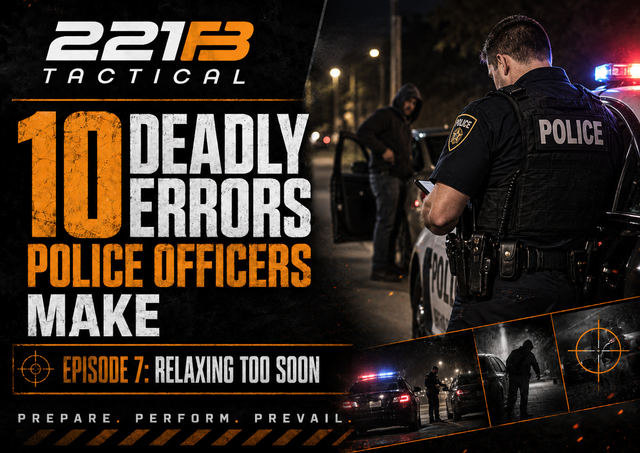
A bad attitude can get a police officer killed long before a suspect ever pulls a weapon. That may sound harsh, but it is true. The moment you begin believing a call is beneath you, a person is harmless, or you have seen it all before, you stop seeing what's actually in front of you.
Most officers do not wake up and decide to become careless. Complacency grows slowly. It begins after hundreds of calls that end without a fight. You handle another alarm, another traffic stop, another domestic, and another suspicious person. Nothing happens, so your mind starts treating the next call like it's gonna be like all the previous ones.
That is where the danger begins.
There Are No Routine People
The call type may be common, but the person standing in front of you is not routine. You do not know what happened before you arrived. You do not know what they are hiding, what they are afraid of, or what decision they have already made. Even if you've dealt with this person before, you have no idea what just happened to them and what they are prepared to do today.
A traffic stop may feel routine to you. To the driver, it may be the moment they believe their freedom is about to end. A domestic call may be your fifth one that week. To the people inside that house, it may be the worst night of their lives.
When you label a situation as routine, your brain starts removing danger before you have earned the right to relax. You stand too close. You stop watching the hands. You look at the computer longer than you should. You let someone walk behind you because they seem calm.
The calls did not become safer. Your attitude became weaker. You became complacent.
Boredom Is Not an Excuse
Police work can be boring. There are long shifts, repeated calls, paperwork, fatigue, and hours when nothing seems to happen. Then, without warning, everything changes.
The dangerous moment may come after six quiet hours. It may come during the call that sounds too simple to matter. That is why discipline matters more than motivation.
You will not always feel sharp. You will not always feel excited about the job. But you still owe yourself, perhaps your partner, and your family your full attention.
You do not need to act afraid. You simply need to remain present.
Your Mind Must Arrive Before Your Body
Before you step out of the patrol car, take a breath and reset. Look at the location. Think about the people involved. Ask yourself what you know, what you do not know, and what could change.
Do not carry the last call into the next one. Do not carry an argument from home into the street. Do not carry anger toward your department, supervisor, or coworkers into a contact with someone who may be dangerous.
Your attitude controls your awareness. Your awareness controls your choices.
If your mind is somewhere else, your body may be standing in a fight before you understand how you got there.
Professional Does Not Mean Passive
A strong attitude does not mean treating everyone like a threat. It means treating every contact like it matters.
You can be respectful while watching the hands. You can speak calmly while maintaining distance. You can show compassion without giving up a safe position.
The best officers do not need to look tense. Their habits protect them. They stay alert because alertness has become part of who they are.
They understand that one lazy moment can erase years of good work. Even worse, it could end their life.
Fix the Attitude Before the Call Fixes It for You
If you feel yourself becoming bitter, bored, angry, or careless, deal with it. Train. Rest. Talk to someone. Take responsibility for the condition of your mind.
Do not wait for a close call to wake you up. That close call could be your last call.
Your badge will not protect you from complacency. Your experience will not save you if your experience has made you careless.
Show up with the right attitude. Stay in the moment. Respect every single call.
There are routine tasks in police work. However, there are no routine people and there are no routine calls.
-Suresh
Suresh Madhavan is the Founder and CEO of 221B Tactical. Raised by a single immigrant mother, Suresh learned the values of discipline, resilience, and work ethic at an early age. Initially pursuing a career in medicine, his path changed after the events of 9/11, leading him to serve his community as a police officer. While working in law enforcement, Suresh saw firsthand the lack of innovation, quality, and purpose built gear available to first responders. What began as a solution built in his garage evolved into 221B Tactical, a brand dedicated to equipping professionals with gear they can trust when it matters most, coupled with a lifestyle which keeps them ready for anything; Mission Ready. After 13 years of decorated service, Suresh took early retirement to build 221B Tactical full time. Since 2003, he has founded and exited three companies and built a commercial real estate portfolio spanning multiple states. Outside of business, Suresh is relentlessly committed to personal growth. He trains Brazilian Jiu Jitsu, lifts weights, prepares for Ironman triathlon competition, runs ultra-marathons, competes in HYROX and works daily with his Belgian Malinois. Everything he builds, in business and in life, is guided by the same principle that defines 221B Tactical: relentless preparation for real world performance helps you “Eliminate The Impossible.”
Request your discount code
Email our Customer Care team with your department and role. Verification takes minutes, and the code never expires.



Have a question about this discount?
Send an enquiry and it goes straight to our sales team at support@221btactical.com — not a public comment. Required fields are marked with an asterisk.