

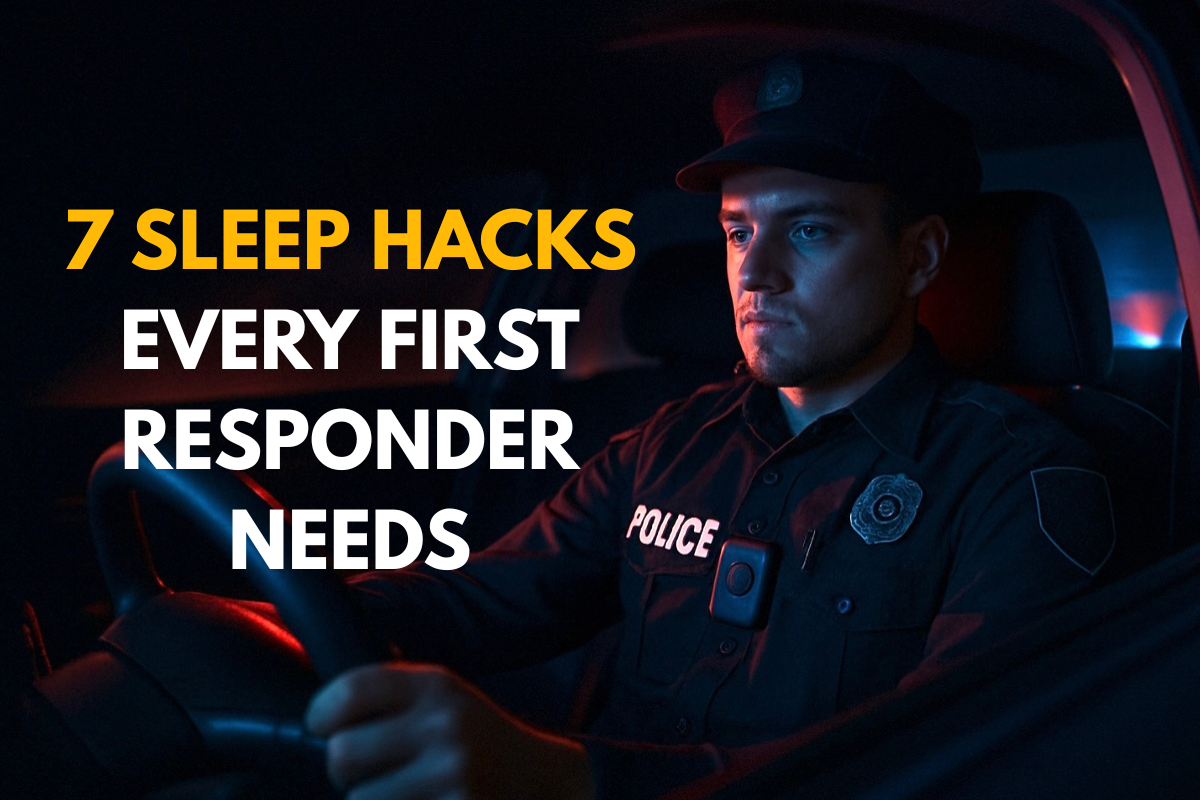
Sleep isn’t a luxury. It’s survival.
For first responders, law enforcement, and military professionals, sleep can mean the difference between sharp decision-making under pressure and costly mistakes. Studies have shown that fatigue impairs judgment and reaction times as much as alcohol does [CDC, 2017]. Yet unpredictable shifts, long hours, and high stress make consistent, restorative sleep seem impossible.
That’s why we’ve put together these 7 proven sleep hacks designed to help you recover faster, perform better, and stay safer on the job.
1. Build a Wind-Down Routine
Your body needs cues to know when it’s time to sleep. Just like you train your muscles, you can train your nervous system to relax. Simple rituals — like stretching, journaling, or five minutes of box breathing — activate the parasympathetic nervous system, which lowers stress hormones like cortisol.
Pro tip: keep the routine short (10–15 minutes) so you’ll actually stick to it, even on back-to-back shifts.
Reference: National Sleep Foundation — Consistent pre-sleep routines help condition the body to sleep faster.
2. Keep Your Room Cool
Research shows that the ideal sleep temperature is 65–68°F. When your core body temperature drops, melatonin production rises, making it easier to fall asleep and stay in deep, restorative stages of sleep.
If cooling the entire room isn’t possible, try using a fan, cooling mattress pad, or even a chilled pillow insert.
Reference: NIH studies show that cooler environments improve both sleep onset and sleep quality.
3. Block Out the Light
Your brain relies on light cues to regulate circadian rhythm. That’s why even small amounts of light — like a streetlight peeking through blinds — can disrupt melatonin release.
For night-shift operators, this becomes even more critical. Blackout curtains or a high-quality sleep mask can trick your body into thinking it’s nighttime, helping you get restorative sleep during the day.
Reference: Harvard Health — Light exposure is the most powerful regulator of circadian rhythm.
4. Cut Caffeine Early
Caffeine has a half-life of about 5–6 hours. That means if you drink a large cup of coffee at 4 PM, half the caffeine is still in your system at 10 PM. Even if you don’t “feel” it, caffeine reduces the amount of deep slow-wave sleep your body gets.
If you need a boost later in the day, switch to green tea or try a brisk 10-minute walk instead. Both can increase alertness without wrecking your sleep cycle.
Reference: Journal of Clinical Sleep Medicine — Evening caffeine intake delays sleep onset and reduces sleep quality.
5. Control the Noise
Sirens, neighbors, or even just a buzzing phone can keep your brain on high alert. White noise machines or fans work because they create a consistent soundscape that masks sudden changes in noise levels — the very thing that wakes you up.
For maximum results, pair white noise with tactical-grade earplugs designed for comfort, not just hearing protection.
Reference: Sleep Research Society — Continuous white noise improves sleep maintenance in noisy environments.
6. Supplement Smartly
You don’t need heavy sleep aids to get results. In fact, they often leave you groggy the next day. Instead, consider natural options:
-
Magnesium glycinate helps relax muscles and regulate GABA, a calming neurotransmitter. Here's what I use: https://makewellness.com/FB9FF782F8/shopping/item?itemId=17
-
Chamomile tea contains apigenin, a compound that promotes relaxation and sleep.
-
Melatonin may help night-shift workers reset circadian rhythm, though it should be used sparingly.
Always consult your doctor before starting supplements, especially if you’re on duty.
Reference: Mayo Clinic — Magnesium and melatonin support sleep quality when used appropriately.
7. Wear Breathable Gear Off-Duty
Most fatigue starts before you even hit the bed. Overheating during a shift leads to higher core body temperature and greater overall exhaustion, making it harder to relax later.
That’s where breathable gear like the Maxx-Dri Vest comes in. By keeping your body cooler and reducing sweat during the day, you don’t carry that heat stress into the night. Less fatigue during the shift equals faster recovery when it’s time to sleep.
Reference: Research on thermoregulation shows heat stress delays the onset of restorative sleep.
Listen, we train hard and work harder. But no matter how tough you are, you can’t out-train bad sleep. Start with even one or two of these hacks tonight, and you’ll feel the difference tomorrow.
Because at the end of the day — or night — sleep for us isn’t about comfort. It’s about survival.
Stay safe out there.
- Suresh
Suresh Madhavan is the CEO and Founder of 221B Tactical, a company he started in his garage in New Jersey that has since grown into a multi-million-dollar brand trusted by operators, first responders, and citizens around the world.
Following the attacks of 9/11, Suresh chose a path of service, entering law enforcement after completing medical school. During his decorated career as a police officer, he earned the Life Saving Medal of Valor, served as a certified firearms instructor and trained new officers as a field training officer.
Today, through 221B Tactical, Suresh continues his mission to innovate gear that saves lives, enhances performance, and empowers those on the front lines—living by the company’s guiding principle: Eliminate The Impossible
Request your discount code
Email our Customer Care team with your department and role. Verification takes minutes, and the code never expires.


Have a question about this discount?
Send an enquiry and it goes straight to our sales team at support@221btactical.com — not a public comment. Required fields are marked with an asterisk.