

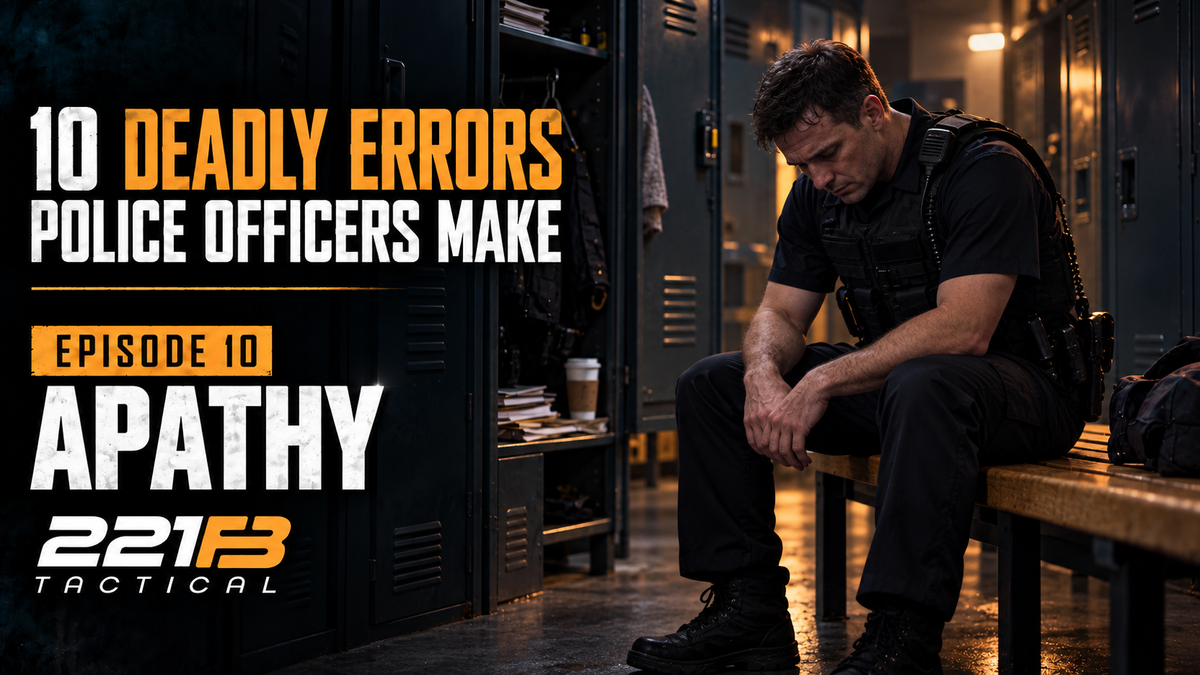
The Deadliest Error May Be the One Nobody Sees
Apathy does not show up with flashing lights and sirens. It creeps in slowly. You stop caring as much as you used to. You stop checking the little things. You start doing just enough to get through the shift, clear the call, finish the report, and go home. Nobody may notice at first, including you.
That is what makes apathy so dangerous. It does not feel like a deadly error. It feels like being tired, frustrated, or fed up. But once an officer stops caring, every other mistake in this series becomes easier to make. You miss danger signs, take bad positions, stop watching the hands, rush searches, relax too soon, and decide backup is not worth the wait.
I Understand How an Officer Gets There
Police work can wear down even the best people. You see the same problems, the same repeat offenders, and the same broken system day after day. You help someone, and they curse you. You make a good arrest, and the case gets dropped. You work short-handed, miss time with your family, and get blamed for things you did not do.
Bad leadership can make it worse. So can forced overtime, poor sleep, public hatred, internal politics, and years of seeing people at their worst. After enough time, an officer may stop believing that anything they do matters. They still put on the uniform, but something inside them has checked out.
I understand that feeling because I wore the uniform. I know what it is like to give everything to the job and feel like the job does not care about you. But understanding apathy does not make it safe. It only helps us recognize where it comes from so we can stop it before someone gets hurt.
Apathy Changes the Way You Police
An apathetic officer stops being curious. The strange movement gets ignored. The story that does not make sense is accepted. The vehicle search becomes a quick glance. The domestic violence victim gets treated like another report instead of a person who may be terrified for their life.
To you, it may be the tenth call of the shift. To the person who called 911, it may be the worst day of their life. They do not know what happened on your last nine calls. They only know that when they needed help, you were the person who arrived. How you speak, listen, and act may shape the way they see law enforcement for the rest of their life.
Apathy also changes how officers treat one another. You stop checking on the new cop. You stop correcting unsafe behavior because you do not want the argument. You see a partner cutting corners and tell yourself it is not your problem. Over time, low standards become normal, and the whole squad becomes less safe.
The Small Things Are Never Small
Officer safety is built on habits. You check your equipment before the shift. You watch the hands. You position your vehicle correctly. You update dispatch, search completely, double-lock the handcuffs, and call for backup before the situation gets out of control. None of these actions feels heroic, but together they keep officers alive.
Apathy attacks those habits first. It tells you that you have done this a thousand times and nothing bad happened. It tells you the suspect seems cool, the call is probably nothing, and checking again is a waste of time. The street only needs you to be wrong once. A shortcut can work hundreds of times before it becomes the mistake you never get to undo.
Complacency says, “This call is safe.” Apathy says, “I do not care enough to make it safe.” That is the difference, and it matters. One comes from getting too comfortable. The other comes from losing the reason you once took pride in doing the job correctly.
Be Honest Before the Street Forces You To Be
If you no longer care about the work, admit it to yourself. That does not make you weak or broken. It means something needs attention. Talk to someone you trust, whether that is a partner, supervisor, peer-support officer, chaplain, counselor, or family member. Take your sleep, health, and stress seriously before they begin making decisions for you.
You may need time away, a different assignment, better boundaries, or professional help. You may need to train again and remember what it feels like to improve. You may need to reconnect with the reason you first put on the badge. Whatever the answer is, doing nothing is still a choice, and the consequences may fall on you, another officer, or someone who called you for help.
Watch your partners too. If a good officer becomes angry, withdrawn, careless, or numb, do not just call them lazy. Check on them. Have the uncomfortable conversation before their pain becomes a safety problem. Sometimes the strongest thing one officer can say to another is, “You have not been yourself. What is going on?”
Finish With the Same Purpose You Started With
Most officers started this career because they wanted to do something that mattered. The job may have changed you, disappointed you, and taken more than you expected. But the mission still matters. The people beside you still matter. The person calling for help still matters, and your life still matters.
This is Episode 10, but the lesson connects every deadly error in this series. Skill matters. Training matters. Good equipment matters. None of it works if you stop caring enough to use it. Fight apathy with discipline, purpose, and the courage to ask for help when you need it.
At 221B Tactical, being Mission Ready is more than what you carry. It is the decision to show up prepared in your body, your mind, and your actions. Care enough to check again. Care enough to speak up. Care enough to protect the people counting on you, and never stop working to Eliminate the Impossible.
- Suresh
Suresh Madhavan is the Founder and CEO of 221B Tactical. Raised by a single immigrant mother, he learned the value of discipline, resilience, and hard work at an early age. Initially pursuing a career in medicine, the events of 9/11 changed his path and led him to serve his community as a police officer.
During his time in law enforcement, Suresh saw firsthand the lack of innovative, purpose-built gear available to first responders. What began as a solution built in his garage became 221B Tactical—a brand dedicated to equipping professionals with gear they can trust when it matters most, while promoting a lifestyle built around one standard: staying Mission Ready.
After 13 years of decorated service, Suresh took early retirement to build 221B Tactical full time. Since 2003, he has founded and exited three companies while building a commercial real estate portfolio across multiple states.
Outside of business, Suresh applies the same standards to his own life. He is a Brazilian Jiu-Jitsu Brown Belt, strength trains, competes in HYROX, runs ultramarathons, trains for Ironman triathlons, and works daily with his Belgian Malinois.
Whether in business, training, or life, his philosophy remains the same: prepare relentlessly, stay Mission Ready, and Eliminate The Impossible.
Request your discount code
Email our Customer Care team with your department and role. Verification takes minutes, and the code never expires.

Have a question about this discount?
Send an enquiry and it goes straight to our sales team at support@221btactical.com — not a public comment. Required fields are marked with an asterisk.