

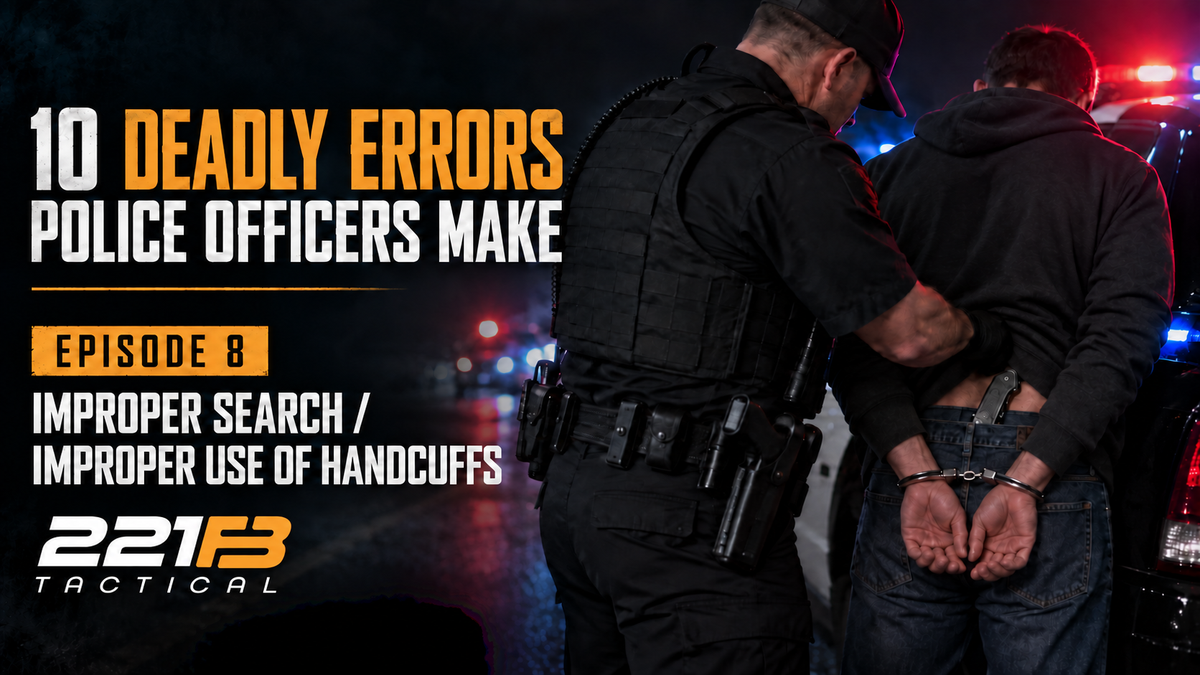
The Search You Rush Could Be the One That Kills You
There are few things more dangerous than believing a suspect is under control when he is not. You got him into cuffs. He stopped fighting. He looks calm. Your body starts to relax because you think the hard part is over. But handcuffs do not make a person safe, and they do not make a weapon disappear. If your search is weak or your cuffs are wrong, the threat is still there. Now it is just hidden behind a false sense of safety.
I have seen officers treat a search like a quick pat-down before moving on to the next task. That is not a search. That is going through the motions. A real search is slow, organized, and complete. It is done the same way every time, even when the suspect is polite, even when backup is waiting, and even when the radio is pulling your attention somewhere else. The moment you skip a step is the moment you give luck control of the outcome.
Weapons Can Be Hidden Almost Anywhere
A gun, knife, razor, handcuff key, needle, or other weapon can be hidden almost anywhere on the body. Suspects have hidden weapons in waistbands, shoes, socks, hats, sleeves, pockets, and layers of clothing. Weapons can also be hidden in body cavities. That may be uncomfortable to think about, but discomfort does not change reality. If a suspect is willing to carry a weapon into custody, you cannot count on common sense, honesty, or decency to protect you.
Never assume another officer already searched the person well. If you take custody of a prisoner, you take responsibility for that prisoner. Search them again according to your training, department policy, and the law. A second search is not an insult to the first officer. It is a safety check that protects you, the transporting officer, the jail staff, and everyone else who may come near that prisoner.
A proper search must follow a system. Start at one point and work your way around the entire body so nothing is missed. Check clothing, seams, waistbands, pockets, shoes, and every place your training tells you to check. Use the proper protective equipment and never blindly reach into a place you cannot see when a needle, blade, or sharp object may be waiting. Speed feels efficient until a missed weapon turns a routine arrest into a fight for your life.
Handcuffs Are a Tool, Not a Guarantee
Too many officers see the cuffs click and mentally mark the suspect as secure. That is a deadly mistake. Handcuffs can be slipped, picked, broken, moved to the front, or used as a weapon. They can also be put on too loose, attached incorrectly, or left unlocked. A suspect who is flexible, determined, high, desperate, or experienced may do things you never expected.
When it is lawful and safe to handcuff, place the hands behind the back unless a medical condition, physical limitation, approved restraint method, or department policy requires something different. Make sure the cuffs are placed correctly and are not so loose that the hands can slip through. Check the fit with your finger, then double-lock both cuffs. The double lock helps stop the cuffs from tightening during movement and makes them harder to manipulate. These small steps take only seconds, but skipping them can change lives forever.
Do not stop watching the hands just because they are cuffed. Keep control of the suspect while moving, searching, and transporting them. Watch for twisting, reaching, pulling, or attempts to move the cuffs. If the suspect keeps testing the restraints, do not explain it away. Treat the behavior as information and respond within your training and policy.
Search Before the Car - and Search the Car
Before placing a prisoner in your vehicle, search them completely. Then check the rear seat and prisoner area before they go inside. When the transport is over, check that area again. If you find a weapon or contraband afterward, you need to know whether it came from that prisoner or was already there. A clean vehicle check before and after every transport protects your life, your case, and your credibility.
Do not let talking, paperwork, radio traffic, or another officer break your search routine. Distraction is where gaps are created. If you are interrupted and you are not sure where you stopped, begin again. Pride may tell you that you already checked. Discipline tells you to make sure. The street does not care how experienced you are, how busy the shift is, or how many clean searches you completed before this one.
Complacency Is What Makes This Deadly
Most bad searches do not happen because an officer does not know better. They happen because the arrest feels routine. The suspect seems cooperative. The call did not sound serious. The officer is tired, rushed, or thinking about what comes next. That is how complacency gets through the door. It makes an officer trade a complete search for a quick one and a proper restraint check for a glance.
There is no prize for finishing a search ten seconds faster. There is no reward for being the officer who says, “He seemed cool.” Your job is to bring everyone home and deliver that prisoner safely. Slow down, follow your system, and verify every step. Control the hands, apply the cuffs correctly, check the fit, double-lock them, search completely, and search again when responsibility changes.
At 221B Tactical, we believe being Mission Ready means doing the basic things right every single time. Good gear matters, but gear cannot replace discipline. Train your habits until the safe way becomes your only way. Stay alert, stay methodical, and never allow a routine arrest to become the moment you wish you could take back. Prepare for what others overlook, protect the people counting on you, and Eliminate the Impossible.
-Suresh
Suresh Madhavan is the Founder and CEO of 221B Tactical. Raised by a single immigrant mother, he learned the value of discipline, resilience, and hard work at an early age. Initially pursuing a career in medicine, the events of 9/11 changed his path and led him to serve his community as a police officer.
During his time in law enforcement, Suresh saw firsthand the lack of innovative, purpose-built gear available to first responders. What began as a solution built in his garage became 221B Tactical—a brand dedicated to equipping professionals with gear they can trust when it matters most, while promoting a lifestyle built around one standard: staying Mission Ready.
After 13 years of decorated service, Suresh took early retirement to build 221B Tactical full time. Since 2003, he has founded and exited three companies while building a commercial real estate portfolio across multiple states.
Outside of business, Suresh applies the same standards to his own life. He is a Brazilian Jiu-Jitsu Brown Belt, strength trains, competes in HYROX, runs ultramarathons, trains for Ironman triathlons, and works daily with his Belgian Malinois.
Whether in business, training, or life, his philosophy remains the same: prepare relentlessly, stay Mission Ready, and Eliminate The Impossible.
Request your discount code
Email our Customer Care team with your department and role. Verification takes minutes, and the code never expires.

Have a question about this discount?
Send an enquiry and it goes straight to our sales team at support@221btactical.com — not a public comment. Required fields are marked with an asterisk.